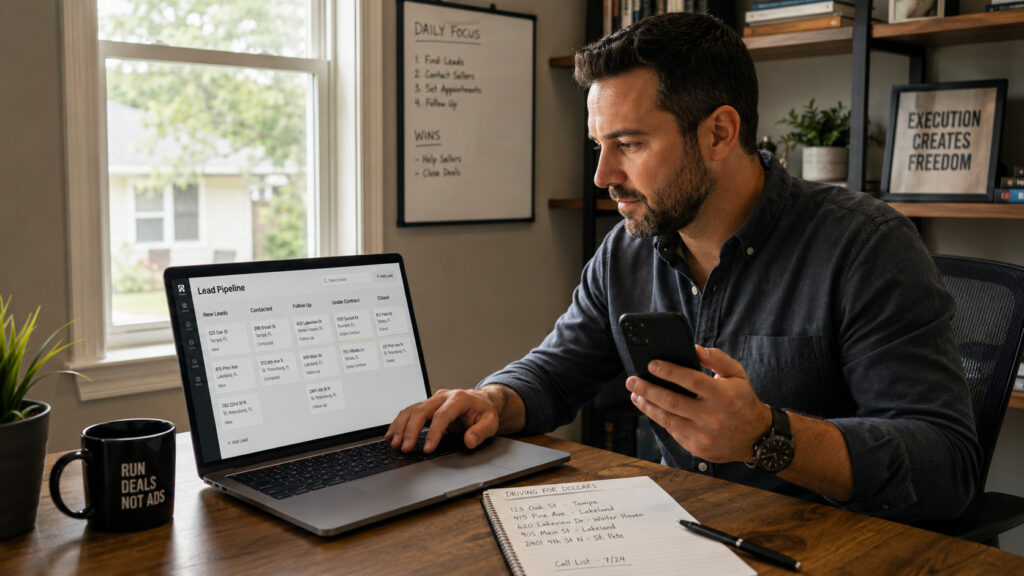
An iBuyer (short for “instant buyer”) is a technology company that uses algorithms to make near-instant, all-cash offers on homes and buys them directly from homeowners. The model was built by Opendoor and Offerpad.
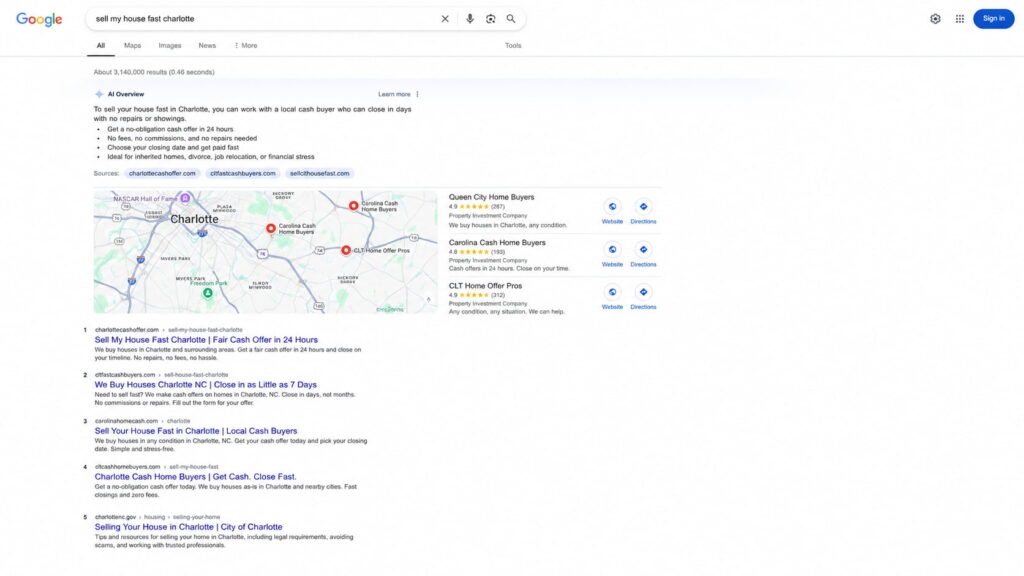
A motivated seller in your market typed “sell my house fast” last night and had a cash offer in 24 hours. It came from an algorithm, not from you. That’s what iBuyers do, and this guide breaks down how they price, what they actually pay, what they charge, and the sellers they will never touch.
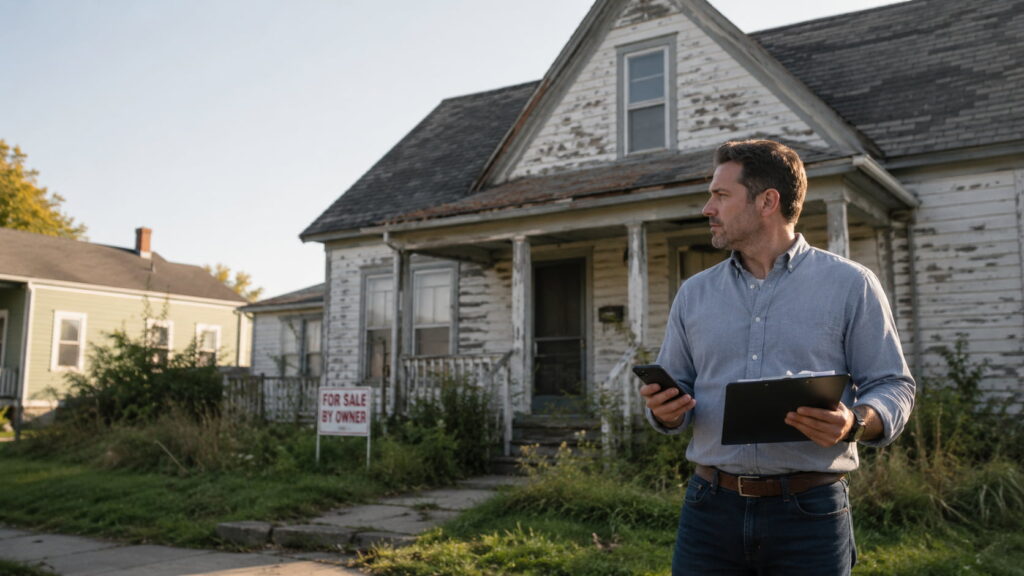
The house an iBuyer’s algorithm rejects is the one a local buyer builds a deal around.
- What Does iBuyer Mean?
- How Do iBuyers Work?
- How Much Do iBuyers Pay for a House?
- iBuyer Fees Explained
- Top iBuyer Companies in 2026
- Pros and Cons of the iBuyer Model
- iBuyers vs. Cash Home Buyers: What’s the Difference?
- Where iBuyers Compete With You, and Where They Don’t
- How to Win the Sellers iBuyers Can’t
- Frequently Asked Questions
What Does iBuyer Mean?
The i is for instant. An iBuyer is a company that buys houses directly and fast, using its own cash or Wall-Street-backed funds, then resells them (NAR). The whole model is built on speed and volume.
That’s the part worth sitting with. An iBuyer is a public company running a spread-and-volume machine, not a local investor who knows which streets flood and which block is about to turn. It isn’t an agent, and it isn’t a traditional flipper. It’s real estate technology buying at scale, and that scale is exactly why it behaves so differently from you.
How Do iBuyers Work?
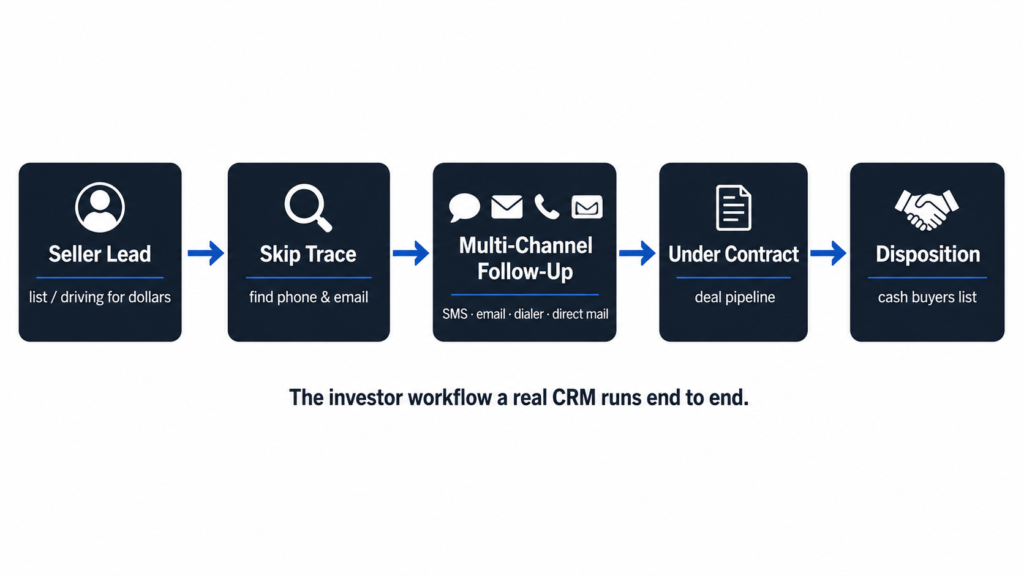
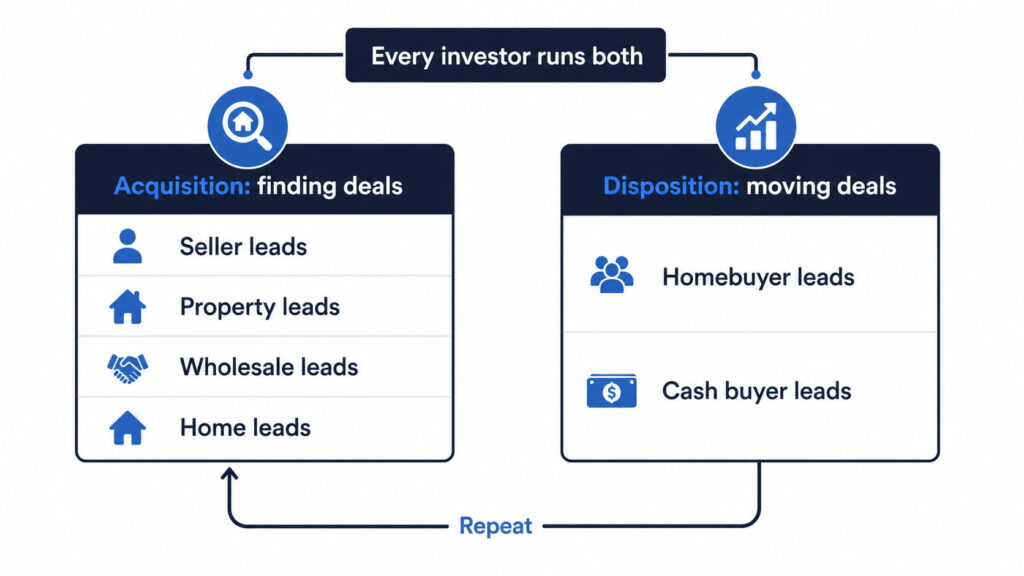
The business model is a cousin of your own: buy the house, do light cosmetic work, resell for a spread. The difference is appetite. An iBuyer wants clean houses it can turn quickly, not a rehab. Two pieces make the machine run: the pricing algorithm and the seller-facing process.
The Automated Valuation Model (AVM)
An iBuyer doesn’t send a person to walk the house first. It uses an AVM (software that prices a house from data, not a walk-through), cross-referencing recent comps, market trends, and property records to price the home sight unseen.
That’s why the offer is fast, 24 to 48 hours, and why it’s brittle. An algorithm can’t see the foundation crack, the tenant who won’t leave, or the 1978 kitchen. When Zillow tried to scale this, it shut the whole division down because forecasting home prices proved far less predictable than the model assumed (Stanford GSB).
Those blind spots are your edge. The house the AVM misprices or refuses is the one you buy right, which is the same reason off-market properties stay profitable for operators who actually see them in person.
The Step-by-Step iBuyer Process
Here’s the funnel your competitor is running against you:
- Enter the address and home details on the iBuyer’s website.
- Receive a preliminary algorithmic cash offer within 24 to 48 hours.
- Pass a virtual or quick in-person inspection, which can revise the offer down (the “final offer” haircut sellers complain about).
- Sign and pick a closing date, as fast as 7 to 14 days or out to about 90.
- Watch the iBuyer resell after light cosmetic work.
Step 3 is the opening. When a seller’s “instant” offer gets cut after the inspection, a firm number from a real person starts looking a lot better.
How Much Do iBuyers Pay for a House?
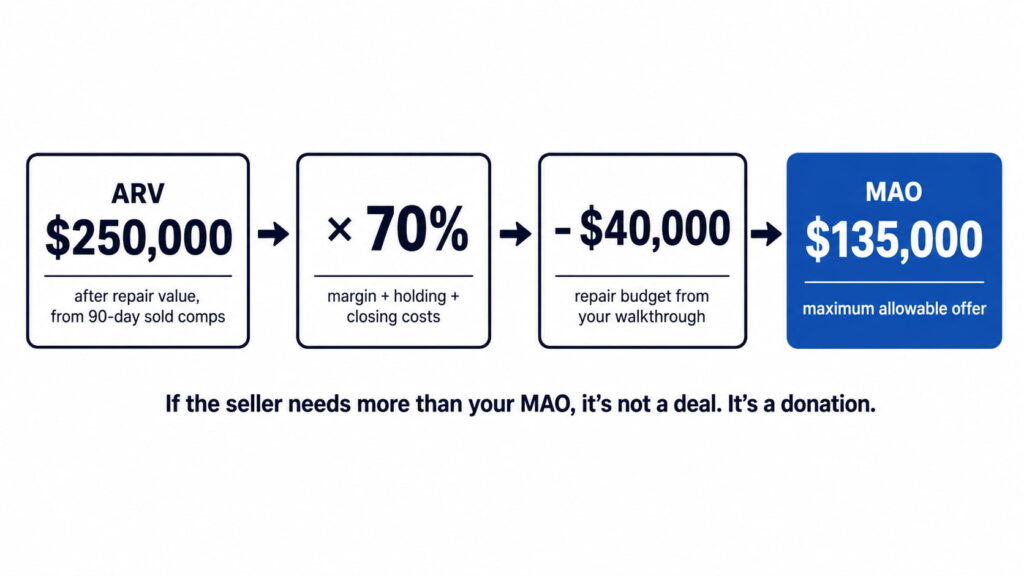
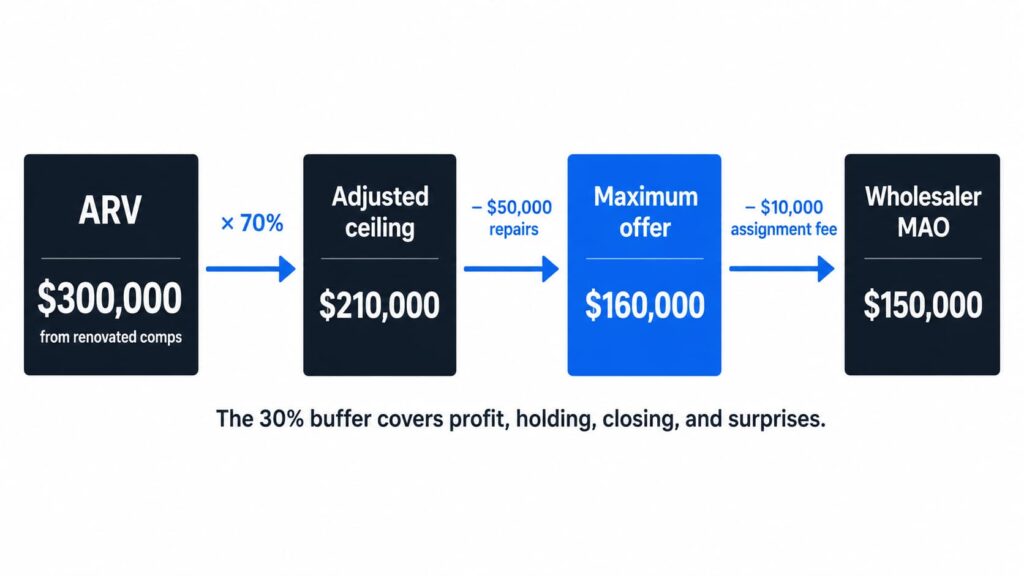
iBuyers pay roughly 70% to 85% of a home’s fair market value. That’s better than the classic “We Buy Houses” cash offer of 50% to 70%, and well below what a patient retail sale would clear. Speed and certainty cost the seller equity.
The cleanest recent number: a February 2026 Clever analysis of 409 Opendoor sales and 123 Offerpad sales (May 2023 through June 2025) found Opendoor offers averaged 8.79% below the home’s eventual resale value, and Offerpad averaged 13.89% below (Clever).
Run it on a $350,000 house. At 8.79% under, that’s about $31,000 left on the table before a single fee. The gap between Opendoor and Offerpad alone, on the same house, is roughly $17,000. That spread is the iBuyer’s margin, and it’s the room you have to move faster, negotiate as a human, or take a house the algorithm won’t.
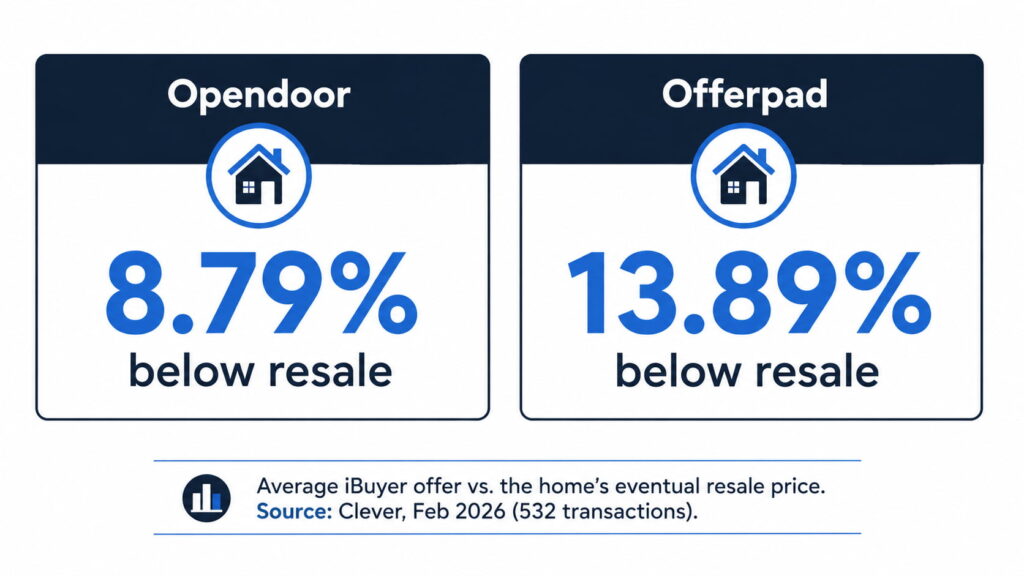
The 8.79% vs. 13.89% gap is why even two national iBuyers aren’t the same offer.
iBuyer Fees Explained
On top of the below-market offer comes the service fee. Opendoor’s runs about 5% of the sale price, plus standard closing costs (Clever). On paper that looks like a traditional agent commission, which usually totals 5% to 6% and is split between the two sides (Opendoor).
Here’s what sellers miss: the fee doesn’t replace the discount. It stacks on top of it. The seller eats the below-market price and the service fee, and once repairs and closing costs are added, the all-in bite can reach low double digits.
| What the seller gives up | iBuyer | Traditional sale |
|---|---|---|
| Offer vs. market value | 70%–85% of value | ~100% (market price) |
| Service fee / commission | ~5% + closing costs | ~5%–6% commission, split |
| Repairs deducted | Yes, after inspection | Negotiated case by case |
| Stacks discount + fee? | Yes, both | No, commission only |
The discount is the quiet cost. The fee is the loud one. A seller staring at both is a seller who will listen to a leaner offer from someone local.
Top iBuyer Companies in 2026
Two national players dominate. Opendoor is the largest iBuyer in the US, operating in more than 50 markets. Offerpad is second (HomeLight). Those are the algorithmic buyers most sellers mean when they say “iBuyer.”
A second group gets lumped in but works differently: trade-in and “power buyer” programs like Orchard and Knock help a seller buy their next house before selling the old one. That’s a financing product, not a pure instant-cash flip.
And a third group is the one you actually fight in your market: franchise cash-buyer brands like HomeVestors and the countless “We Buy Houses” operators. People search “iBuyer” and land on these, but they’re a separate category, and it’s your category.
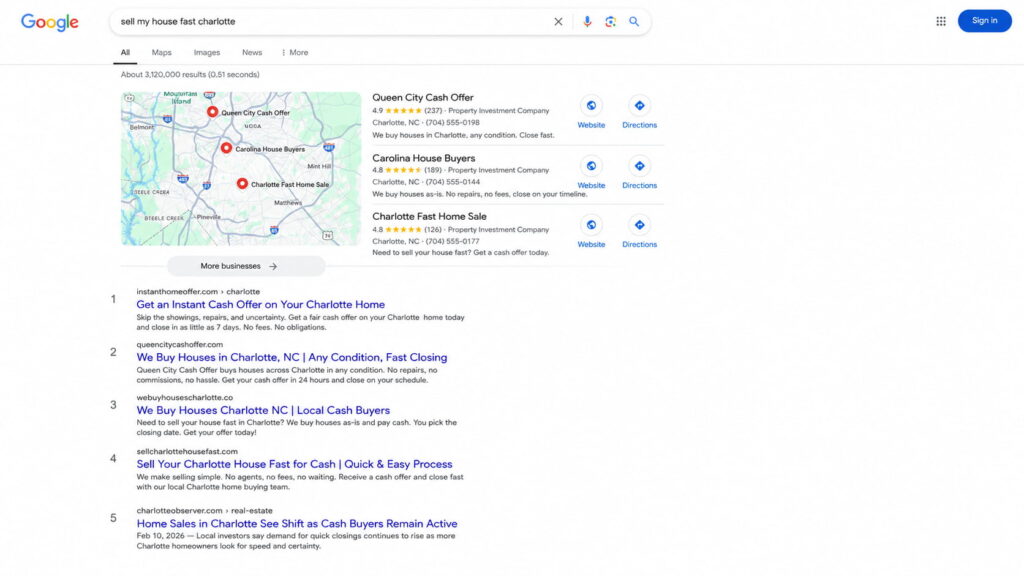
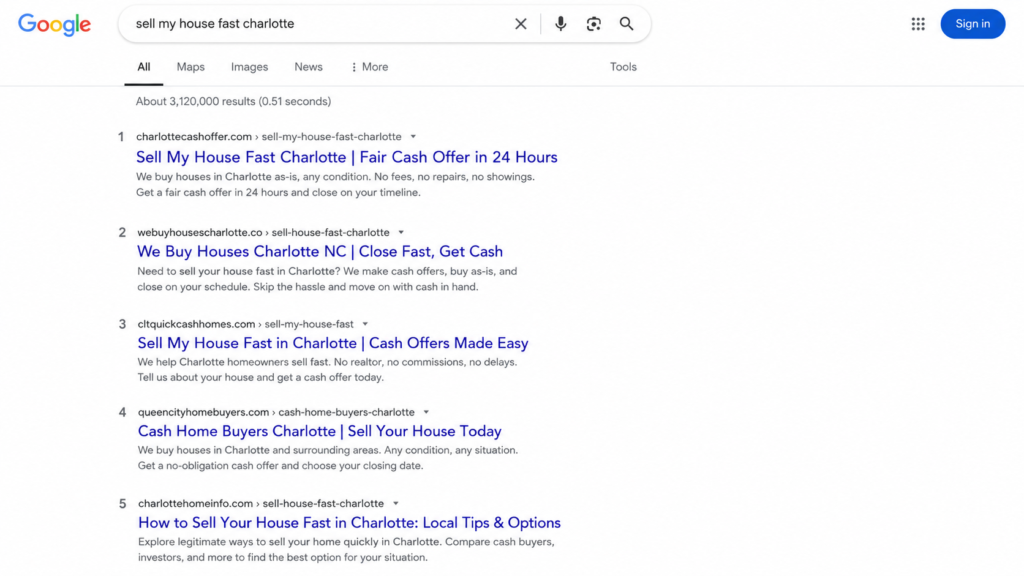
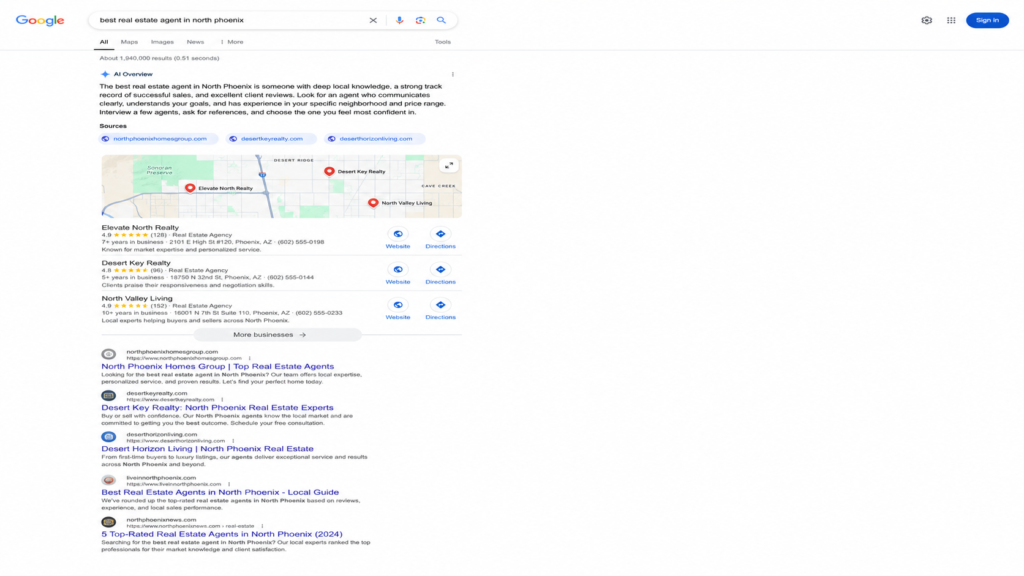
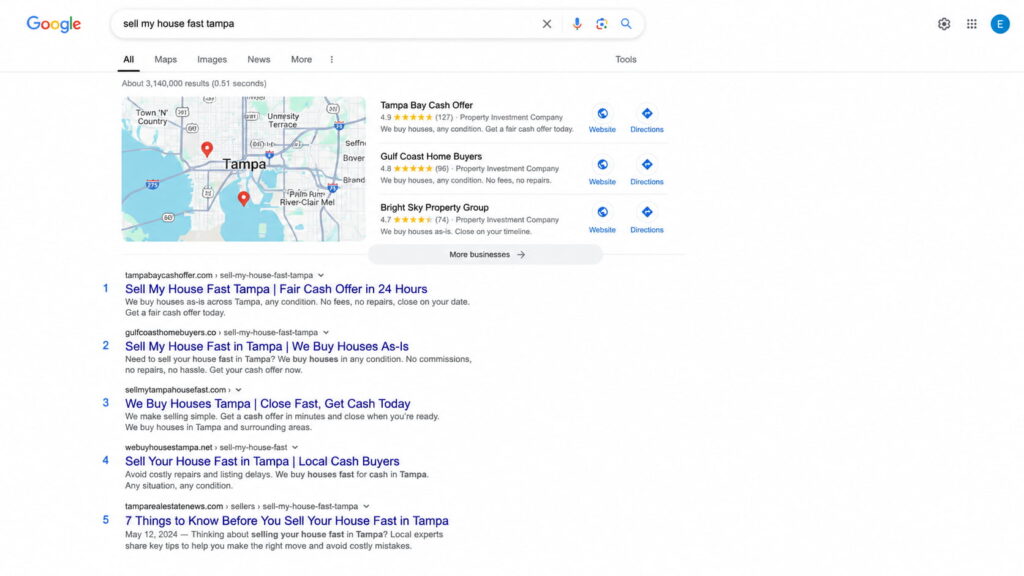
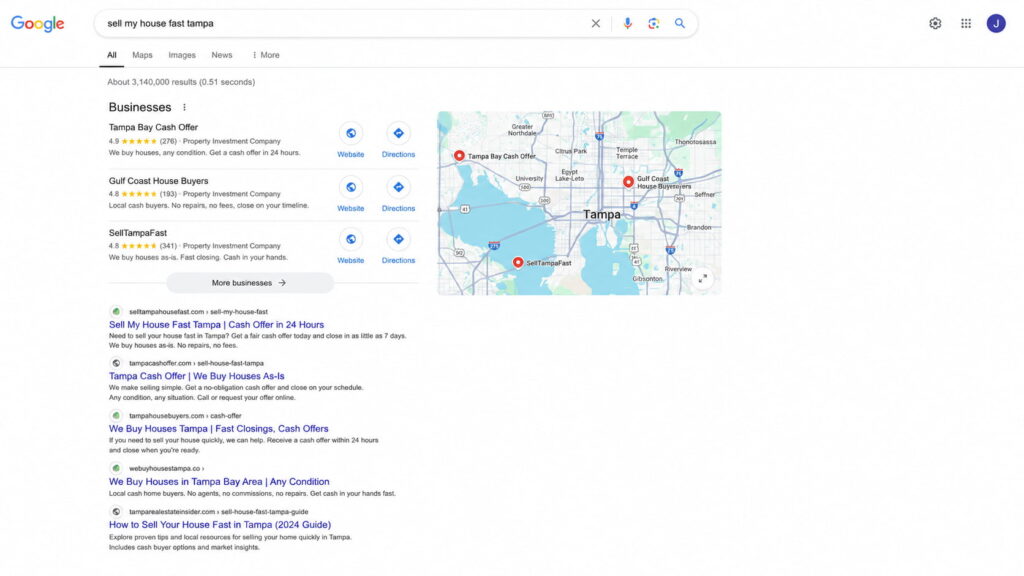
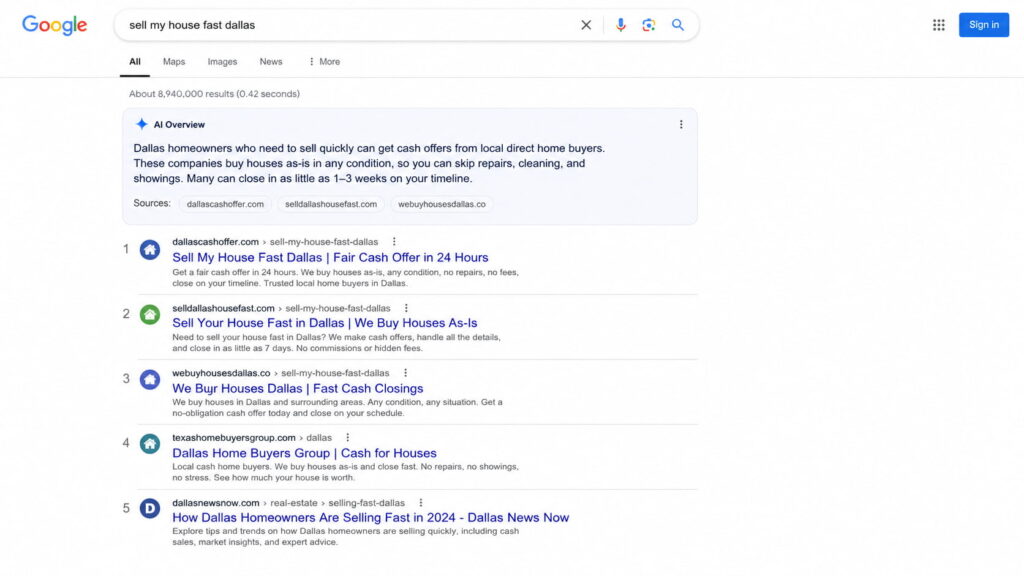
The same search returns a national iBuyer and the local buyers competing for that seller. Whoever ranks gets the call.
One more piece of context: the model is narrower than the headlines suggest. Zillow shut down Zillow Offers in November 2021, and Redfin wound down RedfinNow the next year (Stanford GSB). Two well-funded companies decided the math didn’t work. That fragility is worth remembering when you size up the competition.
Pros and Cons of the iBuyer Model
The model is genuinely good at a few things and genuinely bad at others. Knowing exactly which is how you find your lane.
What the iBuyer model does well:
- Closes fast, often in 7 to 14 days.
- Delivers a certain, all-cash offer with no financing contingency.
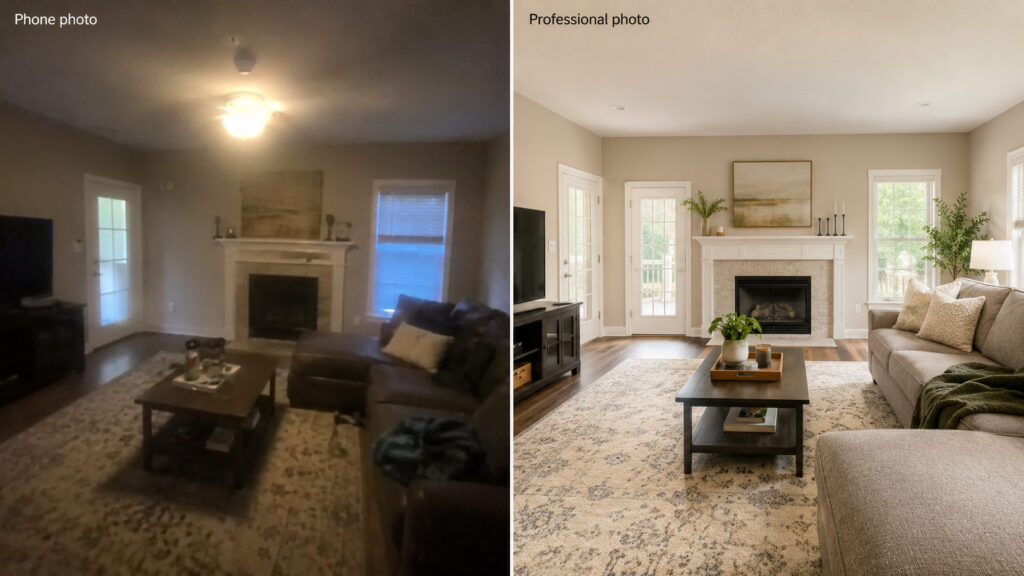
- Skips showings, staging, and open houses.
- Asks for no repairs before closing.
- Lets the seller choose the closing date.
Where the model breaks down:
- Pays below market, 70% to 85% of value.
- Stacks a ~5% fee on top of that discount.
- Feels impersonal, an algorithm and a portal, no negotiation.
- Only wants good-condition homes.
- Only operates in a handful of live metros.
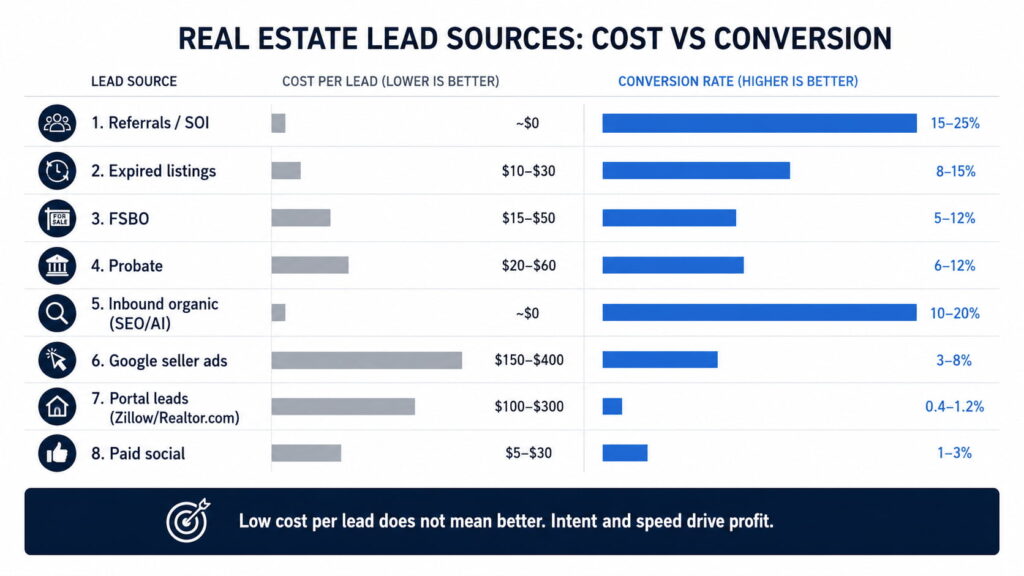
Read the second list again as a map. Below-market plus a fee means a leaner local offer can still win on net proceeds, the cost-per-deal math that actually decides a channel. Good-condition-only and few-metros means every ugly house and every off-map deal is yours by default.
iBuyers vs. Cash Home Buyers: What’s the Difference?
This is the distinction that matters most to you, because you’re one side of it. An iBuyer is an algorithmic corporation that buys good-condition homes in select metros. A local cash home buyer is a real investor who buys any condition, negotiates as a person, usually closes at least as fast, and charges no service fee.
| Factor | iBuyer (Opendoor, Offerpad) | Local cash home buyer |
|---|---|---|
| Who makes the offer | An algorithm (AVM), sight unseen | A real investor who sees the house |
| Condition accepted | Good condition only | Any condition, including distressed |
| Service fee | ~5% + closing costs | Typically none |
| Negotiation | Take-it-or-revised-offer | Real, human, flexible terms |
| Market coverage | ~50+ metros, limited | Wherever the buyer operates |
| Speed | 7–14 days | Often as fast or faster |
Every row is an advantage the local buyer has. But it only counts if the seller can find you. When a homeowner searches “sell my house fast” or asks ChatGPT who buys houses in their city, the buyer who shows up is the buyer who gets the call. Being that name, in Google’s results and in AI answers, is exactly the visibility BASEO builds for cash buyers. That’s how the any-condition, no-fee, real-human advantage actually reaches the seller, instead of losing them to whoever gets cited in AI answers first.
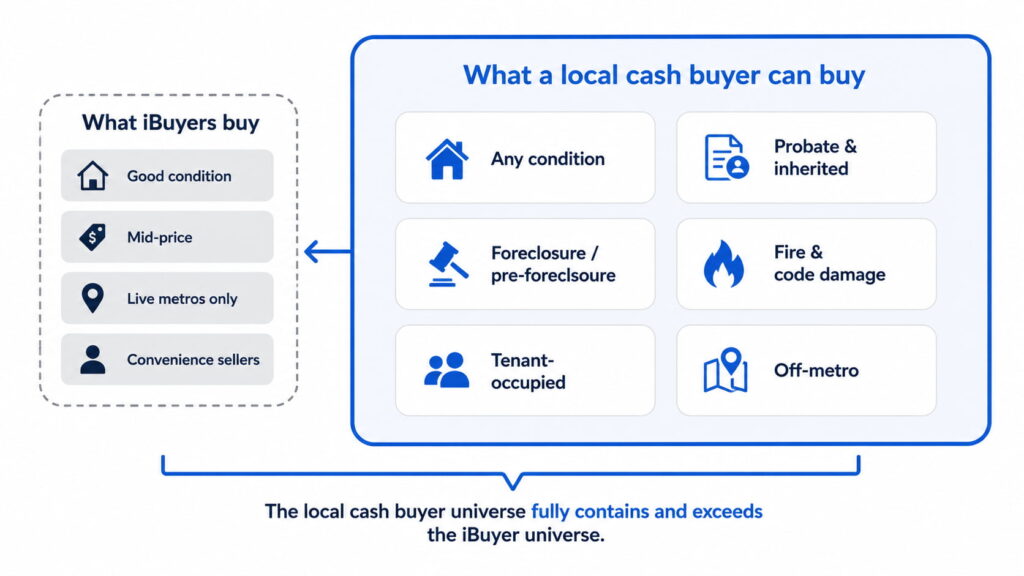
The iBuyer’s box is small on purpose. Everything outside it is the local operator’s territory.
Where iBuyers Compete With You, and Where They Don’t
iBuyers compete hard for one kind of deal: the clean, mid-priced house in a metro they cover, owned by a seller who wants convenience more than top dollar. If that’s the deal, expect an instant offer in the mix.
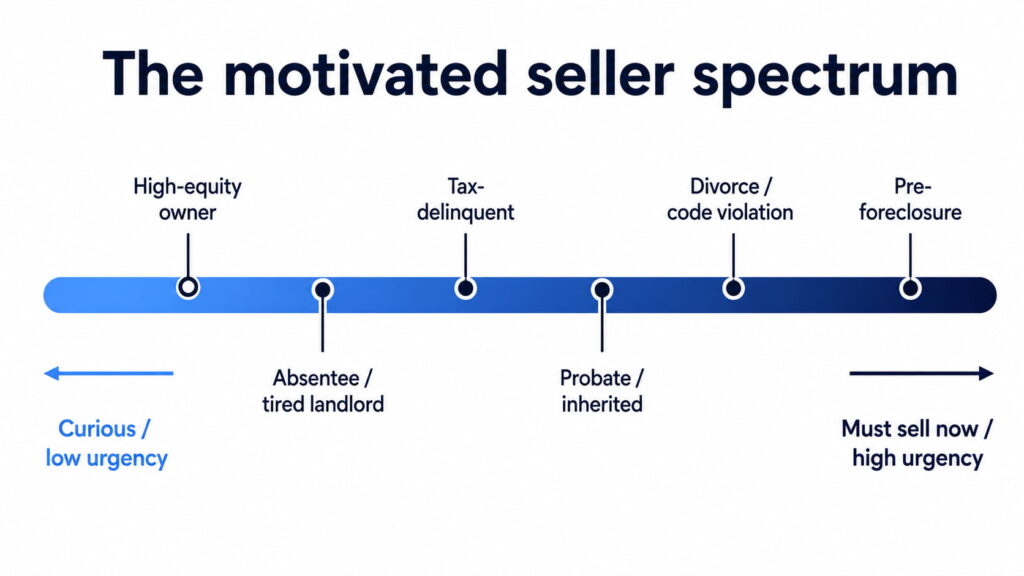
Everywhere else, they don’t show up. That absence is your acquisition map:
- Probate and inherited houses that need clearing out and work.
- Foreclosure and pre-foreclosure deals on a clock.
- Fire, water, and code-violation flips.
- Tired-landlord rentals with tenants still in them.
- Anything outside the iBuyer’s metro list.
Those sellers are searching too, often with more urgency than the convenience seller. They just call whoever they find, which is why building inbound seller leads for exactly these situations matters more than matching an algorithm on price.
How to Win the Sellers iBuyers Can’t
The sellers an iBuyer rejects don’t stop looking. They open Google, they ask ChatGPT who buys houses in their city, and they contact the first credible local buyer they find. The deal goes to whoever is visible.
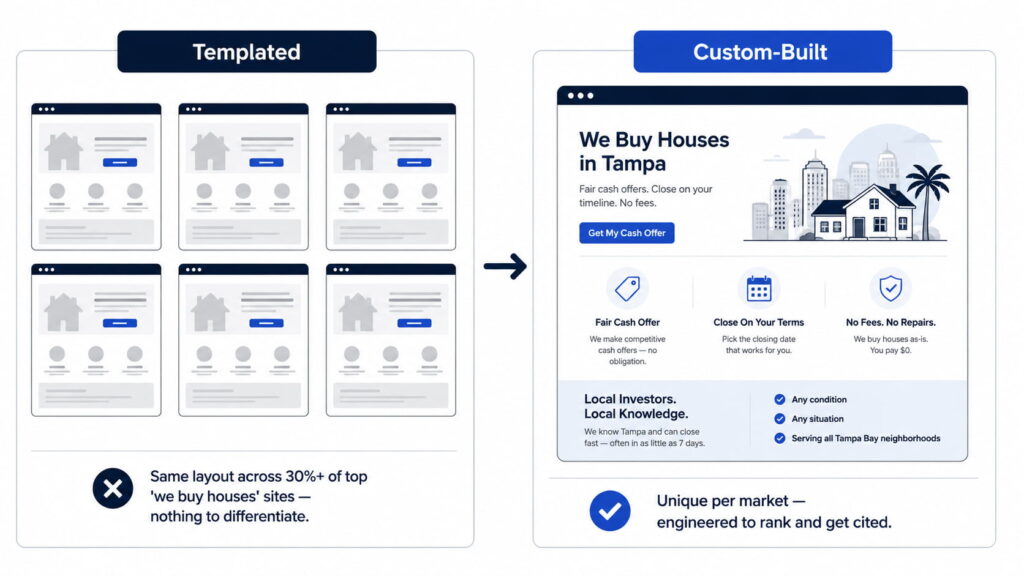
That visibility is the SEO channel BASEO builds for cash home buyers: original landing pages for every market you actually buy in, and content structured so AI search cites you when a seller asks. The goal is simple, that you’re the local name that shows up for the probate, foreclosure, and as-is searches iBuyers ignore, and that every one of those searches has a path to get motivated seller leads into your pipeline.
Frequently Asked Questions
A few quick answers to the questions operators run into most about iBuyers.
Do iBuyers pay fair market value?
Not usually. iBuyers typically pay 70% to 85% of a home’s fair market value, then charge a service fee of around 5%. A February 2026 Clever analysis found Opendoor offers averaged about 8.79% below the home’s eventual resale value. The seller trades equity for speed and certainty.
Are iBuyers legitimate?
Yes. iBuyers like Opendoor and Offerpad are legitimate, publicly known companies that buy homes directly with cash. But “legitimate” doesn’t mean “best price.” An iBuyer offer should always be compared against a local cash buyer or a traditional sale before anyone signs.
How fast can an iBuyer close?
Fast. Most iBuyers make a cash offer within 24 to 48 hours and can close in as little as 7 to 14 days, though the closing date can often be pushed out to about 90 days for flexibility. A local cash buyer can sometimes close even faster.
What’s the difference between an iBuyer and a real estate agent?
An iBuyer buys a home directly with an algorithm-based cash offer, so there are no showings and no waiting for a buyer. A real estate agent lists the home on the market to find a buyer, which usually gets a higher price but takes longer and involves commissions.
The bottom line
iBuyers are a narrow algorithm. They buy clean, mid-priced houses in a handful of live metros, they pay 70% to 85% of value, and they charge a fee on top of the discount. Those limits aren’t a footnote. They define the territory that belongs to a local buyer: any condition, any situation, anywhere you operate.
The sellers iBuyers won’t touch are searching right now, and the deal goes to whoever they find first. If you want to know which of those sellers are searching in your market, who’s ranking for them today, and where you’re invisible, that’s what the free audit is for. It covers your site, your competitors, and your market, and it uses the same real estate SEO that brings deals, not just traffic. Written, in about 2 business days. No call required. Yours to keep.